- Product Overview
- Industry sectors
- Accredited service
- Support & Downloads
- Company
Select your language
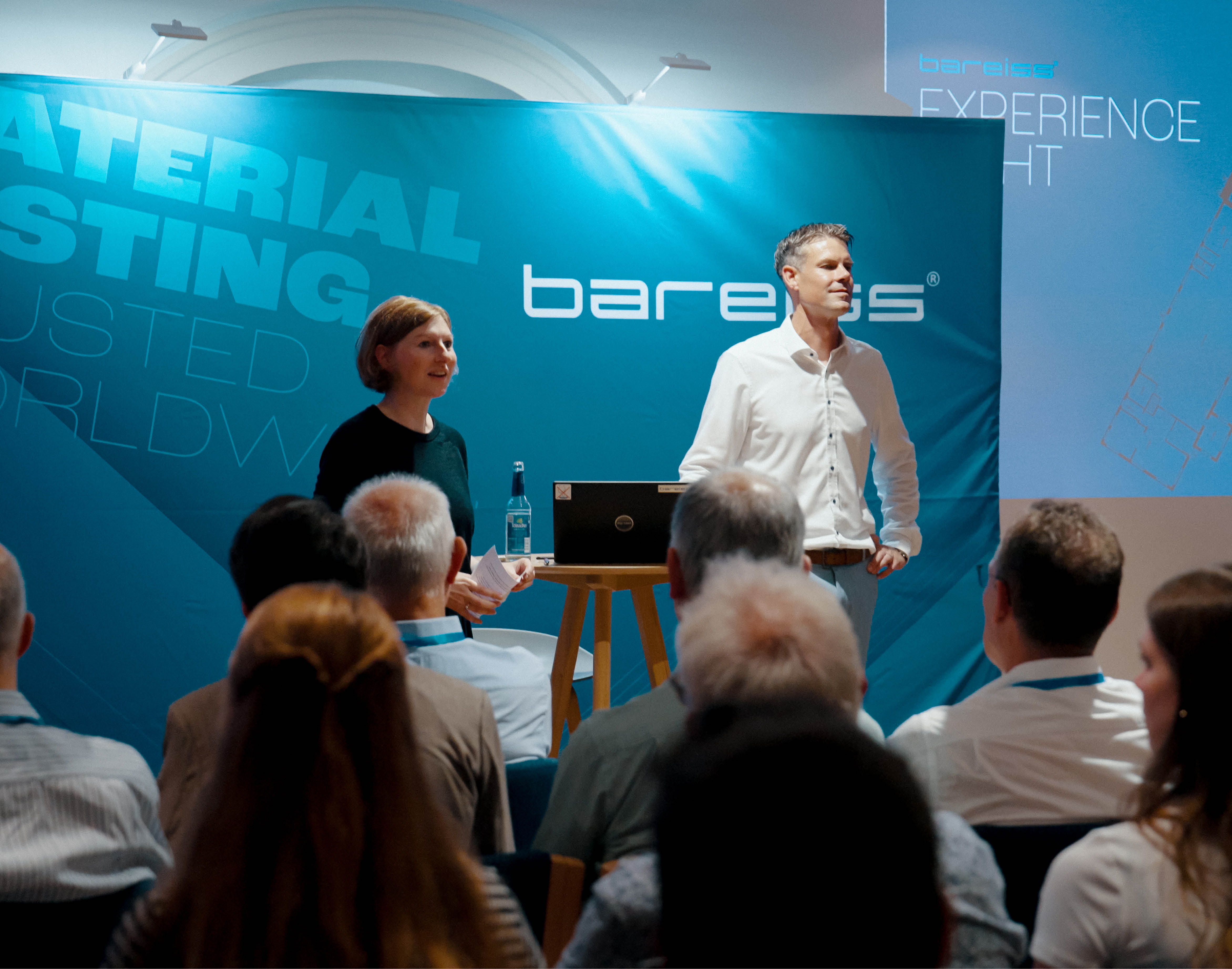
The Bareiss Experience Days 2026 brought together experts from industry and research in Oberdischingen.
The Bareiss Experience Days 2026 brought together experts from industry and research in Oberdischingen.
3 … 2 … 1 …
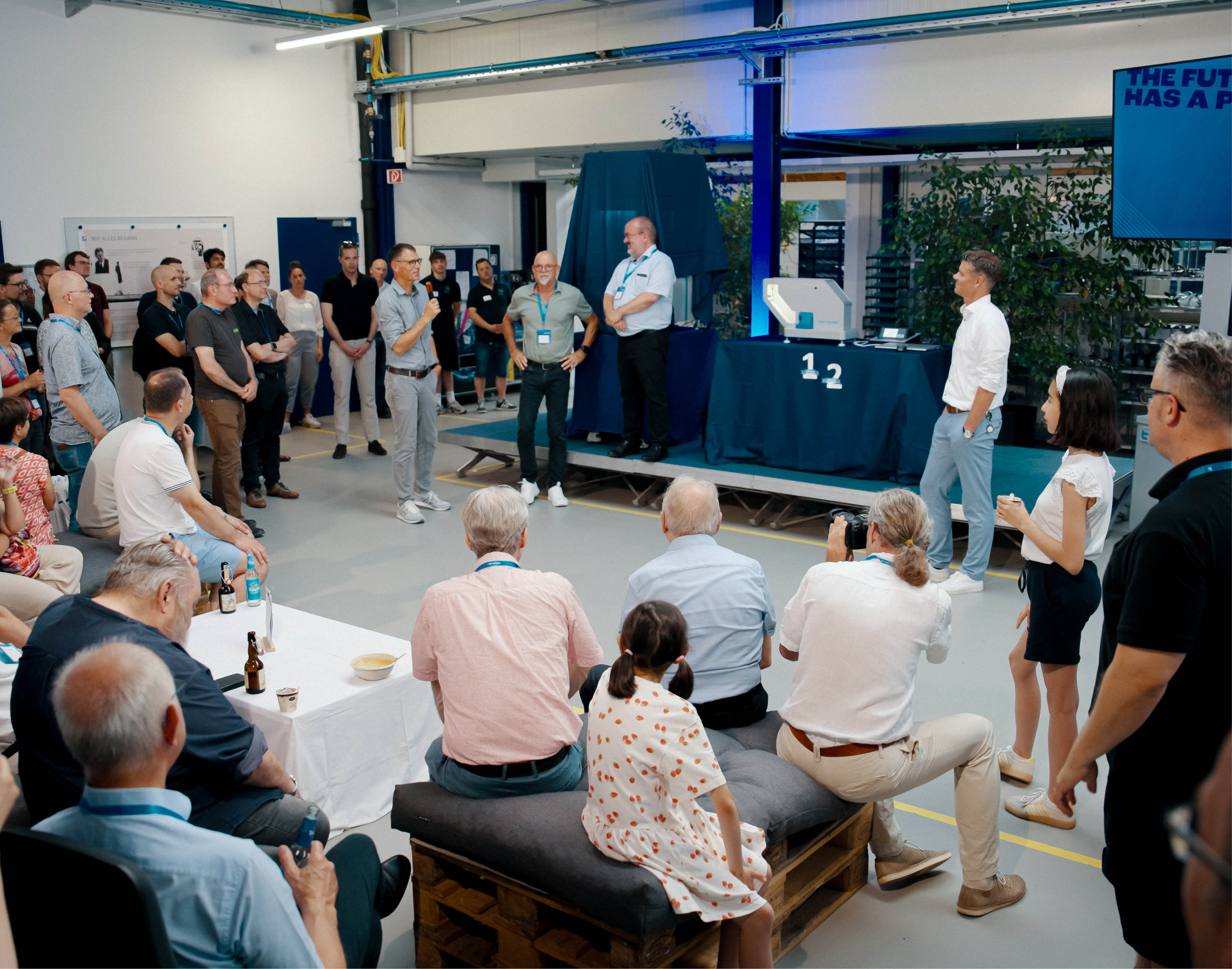
The countdown is on. Conversations fall silent as all eyes turn to the front. As the final seconds tick away, the launch video begins under the motto “The Future Has a Pulse.” Moments later, the new Pulsed Mechanical Analyzer (PMA) is unveiled to the public for the first time. Spontaneous applause fills the room—one of the most emotional highlights of the Bareiss Experience Days 2026.
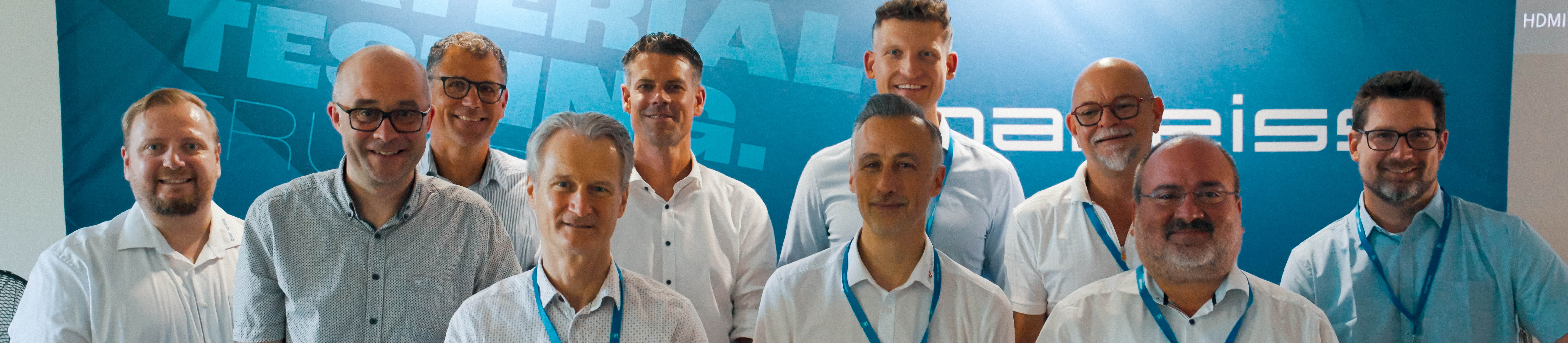
The unveiling of the new measurement system was by no means the end of the event. Instead, it marked the highlight of the Experience Night, which provided a deliberate break in the first day’s program and continued the professional exchange in a distinctive setting. It was not until the following morning that Prof. Dr. Jorge Lacayo-Pineda and Prof. Dr. Claus Wrana picked up the thread again, placing the new measurement concept in its scientific context.
Yet long before the countdown began, it had become clear that the two-day event was about far more than presenting a new testing instrument. Whether the topic was polymer physics, formulation development, extrusion, materials testing, or numerical simulation, the same question kept coming to the fore:
What material information will we need in the future—not merely to test elastomers, but to truly understand their behavior?
Against this backdrop, around 80 experts and speakers from academia and industry gathered in Oberdischingen in late June. The aim of the Bareiss Experience Days was not to showcase individual testing instruments, but to take a shared look at the future of materials characterization.
Host Oliver Wirth addressed this very idea in his opening remarks. Innovation does not arise from modern machinery or new technologies alone. What matters most are people who are willing to question established approaches, share their experience, and work together to develop new solutions. It was precisely this open dialogue that shaped the atmosphere throughout the event.
From Measurement Data to Material Understanding
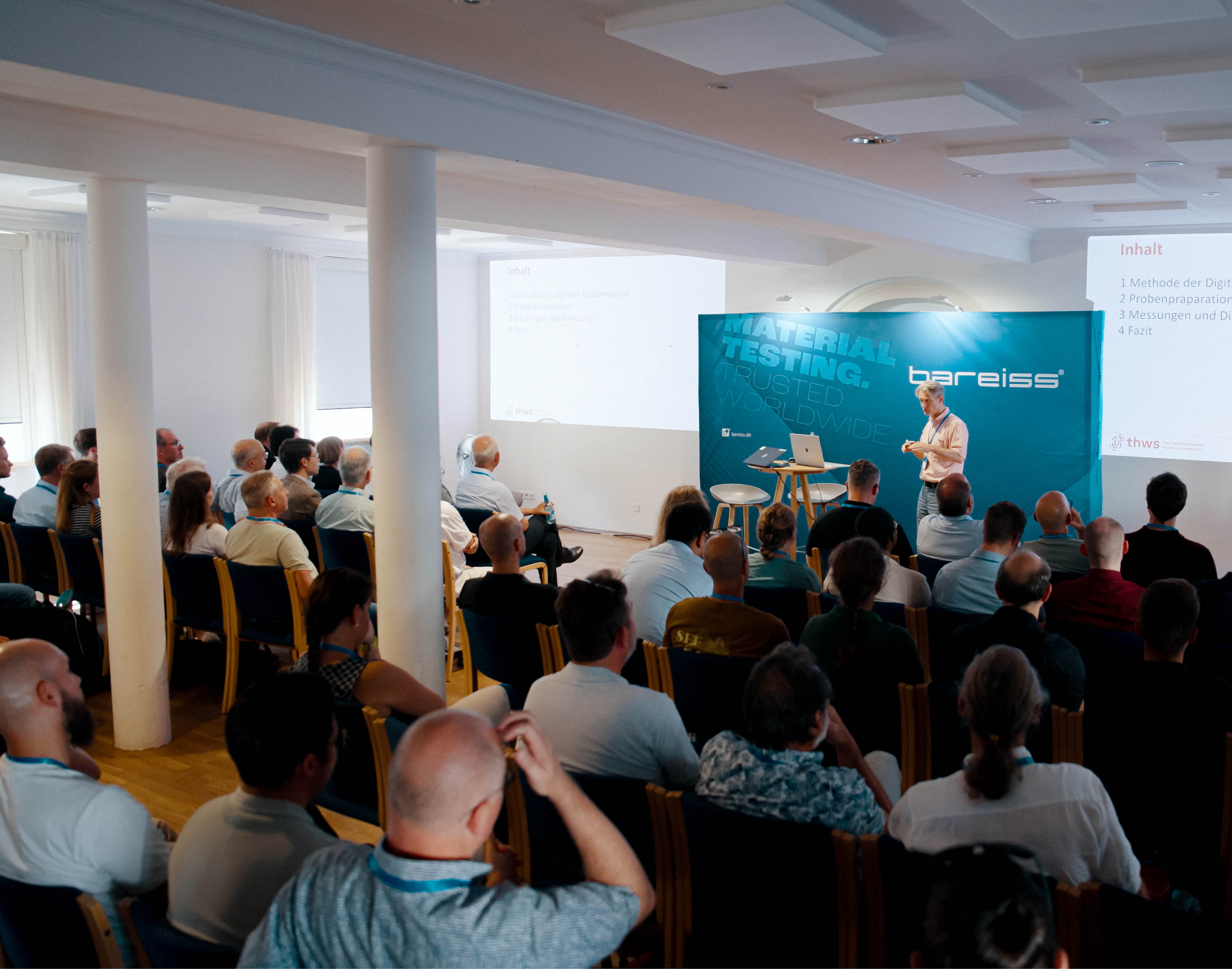
The opening presentations made it clear that materials characterization is currently undergoing a fundamental transformation. The focus was no longer on which parameters a testing instrument can provide, but on what information is actually needed to understand materials and realistically represent their behavior during subsequent processing.
Prof. Dr. Dietmar Auhl established the scientific framework for this discussion. Drawing on the molecular relationships between polymer structure and material properties, he explained why conventional linear testing methods can only provide an incomplete description of modern elastomers. His presentation highlighted the need for additional information on nonlinear material behavior to achieve a deeper understanding of these materials.
Henrik Löffler used the example of digital formulation development to demonstrate that, in the future, this information will not only need to be collected, but also used intelligently. The true value lies not merely in digitizing formulations, but in systematically linking formulation, process, and measurement data. Only high-quality, consistent data make it possible to analyze relationships systematically and significantly improve the efficiency of development processes.
Benjamin Herz also presented the latest generation of the BareissOne software. Its connectivity with a wide range of Bareiss and third-party testing instruments, its server-client architecture for cross-site collaboration, and its open LIMS interfaces enable material data to be managed centrally and used throughout an organization. Digitalization therefore extends beyond the collection of measurement data, laying the foundation for consistent, end-to-end data processes throughout the entire materials development cycle.
Dr. Gerard Nijman then introduced a different perspective. From the standpoint of rubber extrusion, he explored which material information is actually required today to realistically model processing operations. Using practical examples, he demonstrated not only which parameters are already available, but—more importantly—which information is still lacking. These knowledge gaps currently limit the predictive power of many simulation models while also defining the requirements for future testing methods.
The subsequent presentations demonstrated how new measurement techniques could help close these gaps. Using image-based strain analysis, Prof. Dr. Volker Herrmann showed that modern optical measurement methods can reveal local differences within materials that remain hidden in conventional tensile tests. Prof. Dr. Herbert Baaser established the link between experimental materials testing and numerical material models, illustrating how dynamic mechanical measurements can contribute to the development of robust material models.
Patrick Heyer emphasized that even established testing methods must be continuously reassessed. His critical analysis of today’s standard cure rheology methods showed that materials have evolved considerably over recent decades, while many measurement principles have remained virtually unchanged. He advocated systematically reviewing boundary conditions and measurement geometries to obtain reproducible and physically meaningful material data.
Timo Gebauer concluded this thematic session by turning the focus to numerical simulation. His message was as simple as it was compelling: simulations are no longer limited by computing power, but by the quality of the available material models. The capabilities of modern simulation software therefore depend directly on the relevance and reliability of experimentally determined material data.
Innovation Through Dialogue
The Experience Night deliberately shifted the event into a different setting. Professional exchange moved from the conference room directly into Bareiss’s production facilities, where conversations continued in a distinctive atmosphere. Presentations flowed seamlessly into personal discussions as speakers and attendees explored questions from both scientific and practical perspectives and took the opportunity to share their experiences in depth.
The production facilities themselves became the event’s stage. Across the themed areas “Tradition & Home,” “Innovation,” “Precision & Quality,” “Worldwide,” and “Everything from a Single Source,” guests gained insights into the company’s philosophy and the values behind the developments presented.
One attendee summed up their impressions:
“At a time when there is so much debate about Germany’s productivity and competitiveness, the Bareiss Experience Days were a refreshing exception. Witnessing the live premiere of the new Pulsed Mechanical Analyzer was a truly special experience. In recent years, Bareiss has repeatedly demonstrated that genuine innovation still comes from Germany and continues to provide valuable impetus for the rubber industry.”
The highlight of the evening was the premiere of the Pulsed Mechanical Analyzer. What made it remarkable was not so much the unveiling of a new measurement instrument, but the way it was embedded within the event’s broader technical and scientific context.
More Than a Technical Conference
When Prof. Dr. Jorge Lacayo-Pineda and Prof. Dr. Claus Wrana provided a scientific perspective on the new measurement principle the following morning, the circle was complete. The presentation of the PMA had not been the starting point of the discussion—it was its logical consequence.
The Bareiss Experience Days 2026 demonstrated that materials characterization is undergoing a fundamental transformation. The focus is no longer on individual testing methods or parameters, but on determining which information is actually needed to understand materials, model processes realistically, and produce reliable simulations.
As the applause following the unveiling of the Pulsed Mechanical Analyzer faded, one key insight remained: the future of materials characterization will not be determined by new testing instruments alone. It will depend on our ability to obtain precisely the material information required to understand modern materials and how they are processed. In this sense, the PMA marked not so much the end of a development, but rather its beginning.

We have experience.
We have been active in the field of measurement technology since 1954 - now in the third generation.

We stay true to ourselves.
All of our products are developed and manufactured in Germany.

We are accredited.
Our DAkkS accredited calibration laboratory is certified according to DIN EN/IEC 17025.

We are committed.
We are a member of the DIN committee and set standards there in the area of hardness.

We have inventive talent.
We have developed and registered over 25 patents in the last few decades.

We distribute worldwide.
We and our partners are there for you anywhere in the world.
The Bareiss Experience Days 2026 brought together experts from industry and research in Oberdischingen.
3 … 2 … 1 …
The countdown is on. Conversations fall silent as all eyes turn to the front. As the final seconds tick away, the launch video begins under the motto “The Future Has a Pulse.” Moments later, the new Pulsed Mechanical Analyzer (PMA) is unveiled to the public for the first time. Spontaneous applause fills the room—one of the most emotional highlights of the Bareiss Experience Days 2026.
The unveiling of the new measurement system was by no means the end of the event. Instead, it marked the highlight of the Experience Night, which provided a deliberate break in the first day’s program and continued the professional exchange in a distinctive setting. It was not until the following morning that Prof. Dr. Jorge Lacayo-Pineda and Prof. Dr. Claus Wrana picked up the thread again, placing the new measurement concept in its scientific context.
Yet long before the countdown began, it had become clear that the two-day event was about far more than presenting a new testing instrument. Whether the topic was polymer physics, formulation development, extrusion, materials testing, or numerical simulation, the same question kept coming to the fore:
What material information will we need in the future—not merely to test elastomers, but to truly understand their behavior?
Against this backdrop, around 80 experts and speakers from academia and industry gathered in Oberdischingen in late June. The aim of the Bareiss Experience Days was not to showcase individual testing instruments, but to take a shared look at the future of materials characterization.
Host Oliver Wirth addressed this very idea in his opening remarks. Innovation does not arise from modern machinery or new technologies alone. What matters most are people who are willing to question established approaches, share their experience, and work together to develop new solutions. It was precisely this open dialogue that shaped the atmosphere throughout the event.
From Measurement Data to Material Understanding
The opening presentations made it clear that materials characterization is currently undergoing a fundamental transformation. The focus was no longer on which parameters a testing instrument can provide, but on what information is actually needed to understand materials and realistically represent their behavior during subsequent processing.
Prof. Dr. Dietmar Auhl established the scientific framework for this discussion. Drawing on the molecular relationships between polymer structure and material properties, he explained why conventional linear testing methods can only provide an incomplete description of modern elastomers. His presentation highlighted the need for additional information on nonlinear material behavior to achieve a deeper understanding of these materials.
Henrik Löffler used the example of digital formulation development to demonstrate that, in the future, this information will not only need to be collected, but also used intelligently. The true value lies not merely in digitizing formulations, but in systematically linking formulation, process, and measurement data. Only high-quality, consistent data make it possible to analyze relationships systematically and significantly improve the efficiency of development processes.
Benjamin Herz also presented the latest generation of the BareissOne software. Its connectivity with a wide range of Bareiss and third-party testing instruments, its server-client architecture for cross-site collaboration, and its open LIMS interfaces enable material data to be managed centrally and used throughout an organization. Digitalization therefore extends beyond the collection of measurement data, laying the foundation for consistent, end-to-end data processes throughout the entire materials development cycle.
Dr. Gerard Nijman then introduced a different perspective. From the standpoint of rubber extrusion, he explored which material information is actually required today to realistically model processing operations. Using practical examples, he demonstrated not only which parameters are already available, but—more importantly—which information is still lacking. These knowledge gaps currently limit the predictive power of many simulation models while also defining the requirements for future testing methods.
The subsequent presentations demonstrated how new measurement techniques could help close these gaps. Using image-based strain analysis, Prof. Dr. Volker Herrmann showed that modern optical measurement methods can reveal local differences within materials that remain hidden in conventional tensile tests. Prof. Dr. Herbert Baaser established the link between experimental materials testing and numerical material models, illustrating how dynamic mechanical measurements can contribute to the development of robust material models.
Patrick Heyer emphasized that even established testing methods must be continuously reassessed. His critical analysis of today’s standard cure rheology methods showed that materials have evolved considerably over recent decades, while many measurement principles have remained virtually unchanged. He advocated systematically reviewing boundary conditions and measurement geometries to obtain reproducible and physically meaningful material data.
Timo Gebauer concluded this thematic session by turning the focus to numerical simulation. His message was as simple as it was compelling: simulations are no longer limited by computing power, but by the quality of the available material models. The capabilities of modern simulation software therefore depend directly on the relevance and reliability of experimentally determined material data.
Innovation Through Dialogue
The Experience Night deliberately shifted the event into a different setting. Professional exchange moved from the conference room directly into Bareiss’s production facilities, where conversations continued in a distinctive atmosphere. Presentations flowed seamlessly into personal discussions as speakers and attendees explored questions from both scientific and practical perspectives and took the opportunity to share their experiences in depth.
The production facilities themselves became the event’s stage. Across the themed areas “Tradition & Home,” “Innovation,” “Precision & Quality,” “Worldwide,” and “Everything from a Single Source,” guests gained insights into the company’s philosophy and the values behind the developments presented.
One attendee summed up their impressions:
“At a time when there is so much debate about Germany’s productivity and competitiveness, the Bareiss Experience Days were a refreshing exception. Witnessing the live premiere of the new Pulsed Mechanical Analyzer was a truly special experience. In recent years, Bareiss has repeatedly demonstrated that genuine innovation still comes from Germany and continues to provide valuable impetus for the rubber industry.”
The highlight of the evening was the premiere of the Pulsed Mechanical Analyzer. What made it remarkable was not so much the unveiling of a new measurement instrument, but the way it was embedded within the event’s broader technical and scientific context.
More Than a Technical Conference
When Prof. Dr. Jorge Lacayo-Pineda and Prof. Dr. Claus Wrana provided a scientific perspective on the new measurement principle the following morning, the circle was complete. The presentation of the PMA had not been the starting point of the discussion—it was its logical consequence.
The Bareiss Experience Days 2026 demonstrated that materials characterization is undergoing a fundamental transformation. The focus is no longer on individual testing methods or parameters, but on determining which information is actually needed to understand materials, model processes realistically, and produce reliable simulations.
As the applause following the unveiling of the Pulsed Mechanical Analyzer faded, one key insight remained: the future of materials characterization will not be determined by new testing instruments alone. It will depend on our ability to obtain precisely the material information required to understand modern materials and how they are processed. In this sense, the PMA marked not so much the end of a development, but rather its beginning.
The Bareiss Experience Days 2026 brought together experts from industry and research in Oberdischingen.
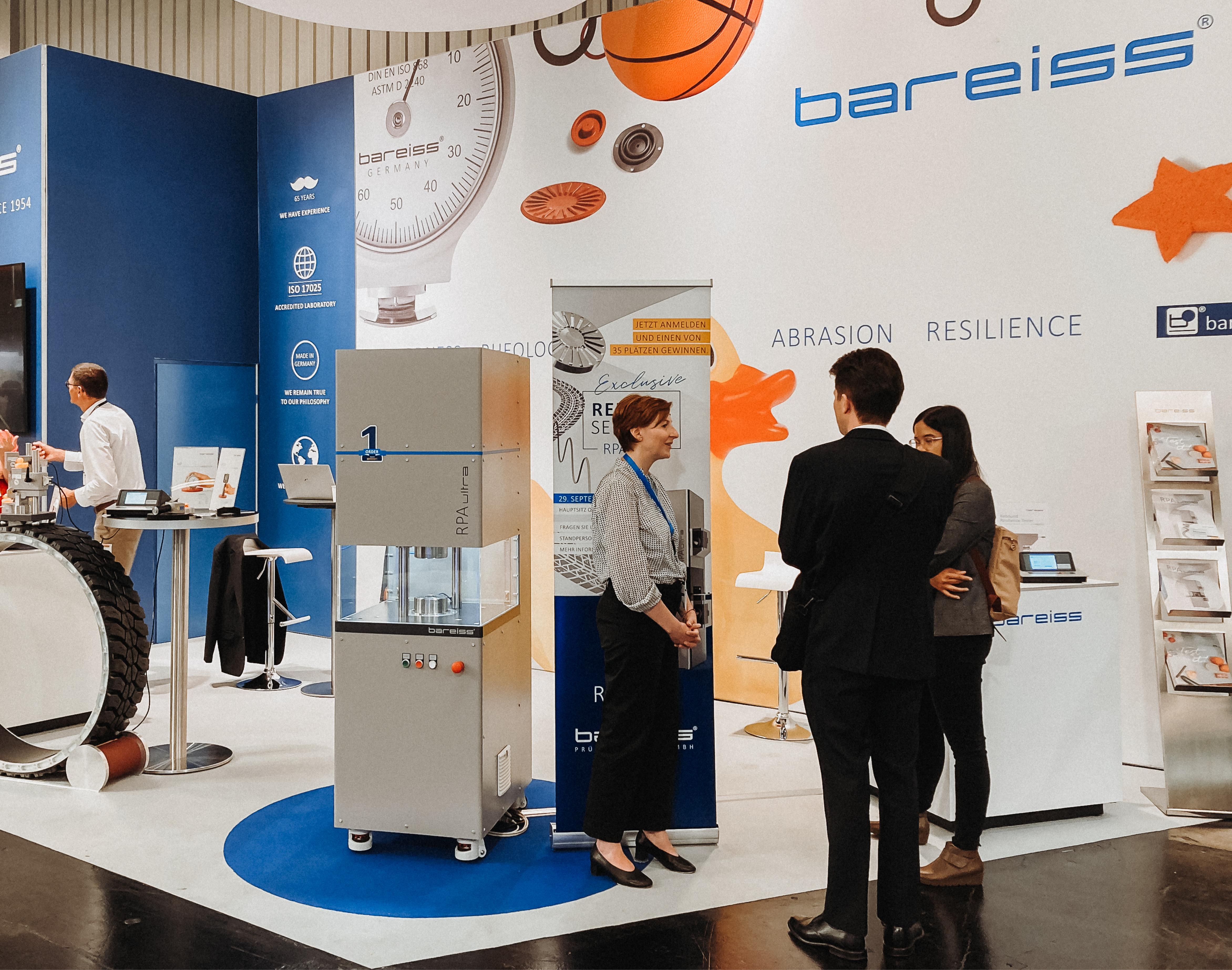
In 2026, we will once again be personally present worldwide with expert talks, seminars, and trade fair appearances.